

For example, if a company starts with $500,000 in retained earnings, earns $100,000 in net income, and pays $20,000 in dividends, its ending retained earnings balance will be $580,000. This figure shows how much profit has been reinvested back into the business. Retained earnings, also known as accumulated profits, represent the cumulative business earnings minus dividends distributed to shareholders. To fully understand this concept, it’s helpful to know how to calculate retained earnings, as it provides insight into a company’s profitability over time.
What Is Equity and How Do You Calculate It for Shareholders? Here’s What You Need to Know.
While high equity generally signifies stability and strength, low equity can be a total shareholder equity formula sign of risk, though in some cases it might indicate an aggressive growth strategy. The interpretation of whether a company’s total equity is “high” or “low” depends on several factors, including industry norms, the company’s historical performance, and its ability to generate returns. An asset is what a company owns and from which the liabilities are subtracted to obtain its equity value. In short, the asset value can be calculated by adding the firm’s equity and total debt or liabilities. Shareholders’ equity is the residual interest of the shareholders in the company they invest in.
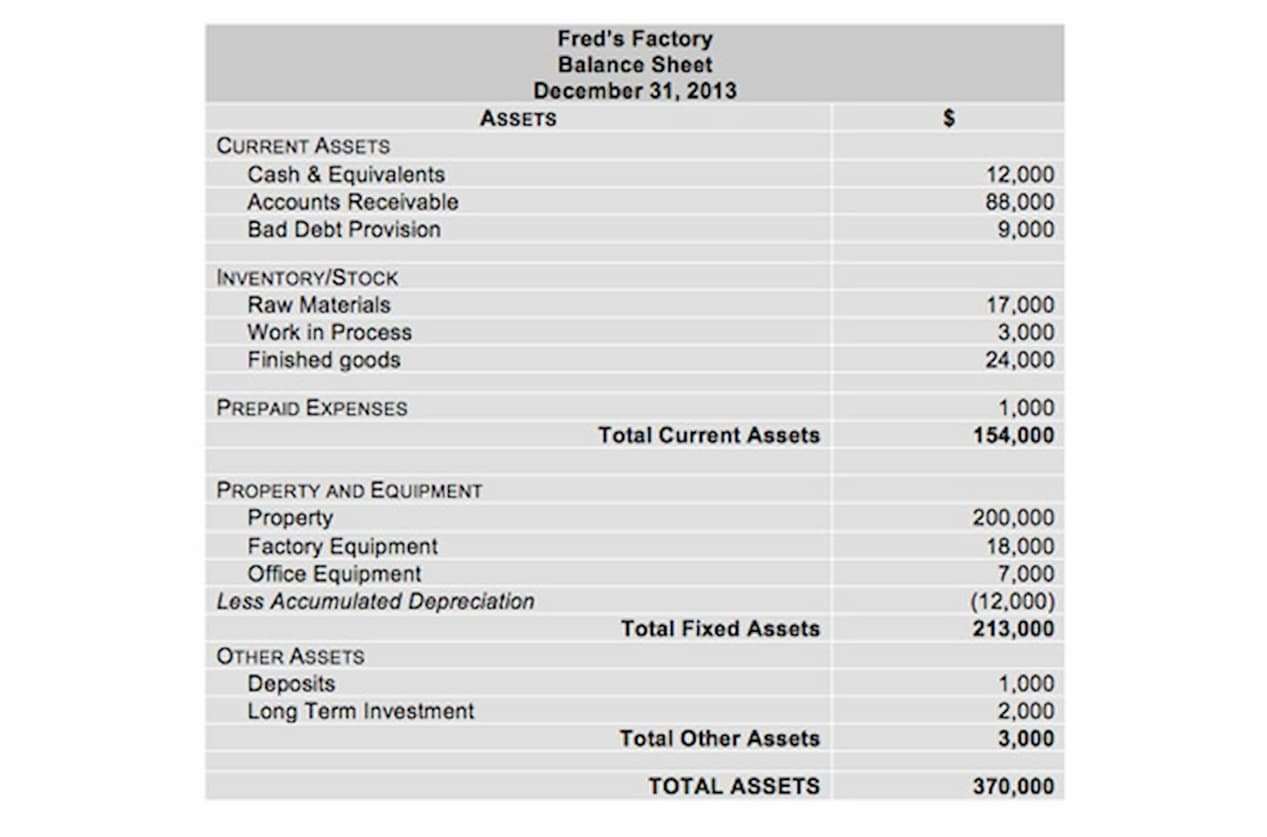
- When the balance sheet is not available, the shareholder’s equity can be calculated by summarizing the total amount of all assets and subtracting the total amount of all liabilities.
- This means that the company has excess assets that can be used to pay back the shareholders should things go downhill.
- Other financial obligations, like leases and pension liabilities, are also part of total debt.
- A note when calculating total assets includes both current and noncurrent assets.
- A company’s average shareholder equity is calculated by taking the shareholder equity from at least two consecutive periods and taking the average.
Real-World Example of Common Equity

The Motley Fool reaches millions of people every month through our premium investing solutions, free guidance and market analysis on Fool.com, top-rated podcasts, and non-profit The Motley Fool Foundation. Shareholder’s assets = liabilities + equity equity is the “book value” of a company’s equity less all liabilities. Similarly, a “business equity” or “company equity” is the value of the company less all of its liabilities. “Equity” is the net value of an asset once all debt or liabilities on the asset are deducted or taken out of consideration.
Long-term Debt Elements
However, most businesses maintain common equity as a flexible and sustainable financing option. APIC refers to the amount investors pay above the par value of the company’s stock during an initial public offering (IPO) or subsequent equity offerings. It measures how much profit the company generates with every dollar invested by shareholders. This can be an especially telling metric for investors who are considering buying an equity stake in the company. It gives insight into a company’s capital structure and debt management. To achieve this, we can use debt reduction programs, equity financing, and retained earnings.

Stockholders Equity
- You look at the company’s balance sheet and figure out that the return on equity is 12% and has stayed at 12% for several years.
- Here, we’ll assume $25,000 in new equity was raised from issuing 1,000 shares at $25.00 per share, but at a par value of $1.00.
- Retained earnings refer to the amount that is retained from a company’s profit instead of being paid out to its shareholders as a dividend.
- Market value is dynamic and constantly changing due to supply and demand dynamics, while shareholder equity remains constant until a company reports new financial statements.
- It gives insight into a company’s capital structure and debt management.
- Bondholders come first in the payment and liquidation hierarchy, followed by preferred shareholders and then common shareholders.
Retained Earnings (RE) are business’ profits that are not distributed https://eparchitecture.com/what-is-a-fractional-cfo-and-how-to-hire-one/ as dividends to stockholders (shareholders) but instead are allocated for investment back into the business. Retained Earnings can be used for funding working capital, fixed asset purchases, or debt servicing, among other things. A few more terms are important in accounting for share-related transactions. The number of shares authorized is the number of shares that the corporation is allowed to issue according to the company’s articles of incorporation. The number of shares issued refers to the number of shares issued by the corporation and can be owned by either external investors or by the corporation itself.
- In the event of a company’s liquidation, debtholders and creditors will be paid before shareholders and will have priority.
- Dividend recapitalization—if a company’s shareholders’ equity remains negative and continues to trend downward, it is a sign that the company could soon face insolvency.
- Current liabilities are key for assessing a company’s short-term liquidity and its ability to meet immediate financial obligations.These liabilities are typically settled using current assets.
- In this example, that lower ROE calculation isn’t necessarily a fair performance metric because the new capital hasn’t had a chance to be invested in profitable opportunities.